
As NSRCEL enters its next phase, the incubator plans to focus on AI, deep technology and global partnerships as it looks to expand its reach.

India's digital economy is projected to constitute nearly 20 per cent of the nation's GDP by 2030, fuelled by a growth rate twice as fast as the overall economy, according to a senior government official.

India has established a high-level inter-ministerial body, the AI Governance and Economic Group (AIGEG), to steer the country's national AI governance strategy. The AIGEG will coordinate policy across ministries and oversee cross-sectoral governance issues, supported by a Technology and Policy Expert Committee (TPEC).

The death toll from devastating flash floods in Nepal has tragically risen to 903, with 4,247 people still reported missing, including security personnel and foreigners. India has dispatched an 18-member team of forensic experts to assist with DNA analysis and identification of victims.

Experts urge internet platforms to adopt prevention-by-design and stronger AI systems to curb child sexual exploitation material and improve online child safety.

A working paper by the Economic Advisory Council to the Prime Minister (EAC-PM) reveals a continuous decline in the rate at which foreign-owned firms invest in fixed assets in India since the FY20 peak, contrasting with a steady increase from Indian business groups.

Mizoram's school education minister inaugurated the northeast region's first 'New Age Tech Skills Centre' at the Government Comprehensive Model School in Aizawl. The centre, established under Bharat Forge Limited's CSR initiative, will offer training in AI, robotics, IoT, 3D printing, CAD, CNC simulation, and drone technology.

UN Women has issued a stark warning that the rapid advancement of artificial intelligence (AI) is placing women at a higher risk of discrimination and digital violence, citing studies that reveal significant gender bias in AI systems and large language models.

A parliamentary panel has decided to review the implementation of reforms in the National Testing Agency (NTA) as well as the NEET-UG 2026 paper leak case and has summoned NTA Chairperson Pradeep Kumar Joshi and other bureaucrats for deliberations.

Union Steel Minister HD Kumaraswamy has urged the Indian steel industry to adopt advanced technologies like AI, Machine Learning, and IoT to enhance global competitiveness and productivity. Speaking at a Chintan Shivir, he highlighted that digitalisation is crucial for achieving ambitious steel capacity targets by 2035 and addressing challenges such as operational efficiency, decarbonisation, and export competitiveness. The minister also emphasised how technology can improve safety and reduce downtime in steel plants.
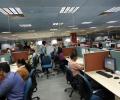
Qlik and ServiceNow have announced a partnership to integrate data analytics and AI into enterprise workflows, enabling faster and more informed decision-making.
A senior US official has emphasised the importance of openness and security in the development of artificial intelligence between India and the US, urging both nations to avoid dependencies on adversarial countries.

'Every period of excessive optimism eventually gives way to a correction, while periods of extreme pessimism often create the best investment opportunities.'

Union Finance Minister Nirmala Sitharaman announced the government's plan to establish a high-powered committee to examine reforms for the banking sector, aligning it with the vision of a 'Viksit Bharat' (Developed India) and India's next phase of growth.

Prime Minister Narendra Modi announced India's strong bid to host the 2036 Olympic Games and detailed plans for a nationwide talent hunt for children aged 5 to 15 to ensure significant participation and success in the event. He highlighted the success of the Target Olympic Podium Scheme (TOPS) and India's growing presence in global sports.
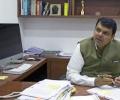
Maharashtra Chief Minister Devendra Fadnavis announced the state's ambition to become India's leader in quantum technology. The state plans to build a robust ecosystem, align with the National Quantum Mission, and train over 5,000 professionals, recognising AI, semiconductors, and quantum tech as key pillars for future growth and global competitiveness.

History may remember Takaichi Sanae not as the leader who simply accelerated Japanese rearmament, but as one who governed during Japan's transition from an industrial-age security model to a post-industrial strategic member of the global order, points out Varun Arya.

Indian IT companies have significantly reduced their fresh H-1B visa applications for US FY27, a direct consequence of soaring fees imposed by the Trump administration and new lottery system changes that prioritise higher-salaried employees, leading to a seven-year low in registrations.

'The government has to act as one unit since the threat from these newer models will soon scale up.'

The political confidence required to place high-end Japanese aircraft and personnel on Indian soil is itself a data point.
It indicates a level of trust that would have been difficult to imagine when India-Japan defence ties were largely symbolic, explains Varun Arya.
At the D Y Patil International University's Foundation Day, experts advised students to embrace AI wisely, highlighting its potential and the importance of critical thinking in the digital age.

If India does get $100 billion a year in FDI, it would be a game-changer in every possible way. FPIs would come rushing back, AI or no AI, points out Debashis Basu.

'The fundamental issue that I have raised, how come India's GDP in current prices went down from Rs 86 lakh crore down to Rs 80 lakh crore -- a staggering erasure of Rs 6 lakh crore. This disappearance of Rs 6 lakh crore has not been answered by anyone.'
World Bank South Asia Chief Economist Franziska Ohnsorge advocates for the removal of obstacles hindering the adoption of artificial intelligence to foster business growth and job creation, particularly in South Asia.
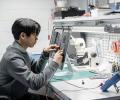
Nayagam PP, career counsellor and founder of EduJobs360, explains how traditional engineering choices are being replaced with flexible, future-ready career paths that align with industry requirements.

For India, the goal is not simply to host another grand diplomatic gathering. It is to prove that a diverse coalition of emerging powers can still deliver.

The Bureau of Indian Standards (BIS) is preparing to significantly increase its silver jewellery testing capabilities and expand its national laboratory network, driven by a shift in consumer demand from gold to silver and a broader push for enhanced product certification and surveillance.

If the government wishes that protests like the one that took place at Jantar Mantar during the last few weeks should not recur, it must refocus its energies on jobs, not just the examination system, points out A K Bhattacharya.

Making UPI payments fee-based for some transactions could enhance mental reservations against digital payments -- which have largely been overcome -- once more. Do we want to regress?, asks R Jagannthan.
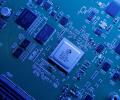
Union Minister Ashwini Vaishnaw announced that two more semiconductor chip packaging units, part of the India Semiconductor Mission, are expected to be operational by July and December, respectively. He also highlighted India's focus on becoming a beneficiary of AI technology, expanding data centre infrastructure with significant investments, and developing new subsea cable networks for global connectivity.

Maharashtra Chief Minister Devendra Fadnavis announced a significant waiver of approximately Rs 48,000 crore in pending electricity dues for farmers, aiming to facilitate new agricultural power connections and support the state's agricultural sector.

Vodafone Idea (Vi) significantly reduced its losses in Q1 FY27 to approximately 3,754 crore, driven by an exceptional gain and increased average revenue per user (Arpu). The company also reported its first net subscriber additions since its 2018 merger, indicating a positive shift in its operational trajectory.

Kumar Mangalam Birla urged young people to 'build in India, build for India and build for the world'.

'All these reports and announcements by the US seem like attempts to gain a lever in trade deal negotiations with India.'
Air India is significantly embracing artificial intelligence to enhance operational efficiency, improve customer services, increase revenues, and reduce costs as part of its ambitious transformation plan under the Tata Group.

GenAI recorded the widest talent gap, followed by AI deployment engineering (72.4 per cent), AI governance (70 per cent), and MLOps (68 per cent).

Google CEO Sundar Pichai highlighted the transformative potential of AI at the India AI Impact Summit, emphasizing its role in scientific discovery, economic development, and workforce evolution.

The Biotechnology Industry Research Assistance Council (BIRAC) has chosen seven to eight biotechnology startups as the initial group to receive funding from the government's ~1 trillion Research, Development and Innovation (RDI) Fund, with an average investment of approximately ~25 crore per startup.
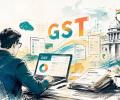
As India marks a decade of the Goods and Services Tax (GST), the focus is shifting towards enhancing efficiency through artificial intelligence, data sharing, and process simplification. The reform, which unified India's indirect tax system, has significantly broadened the tax base and boosted revenues, with future plans including a streamlined two-tier rate structure and continued technological integration to reduce compliance costs and combat evasion.

The Consumer Affairs Ministry is developing machine-readable SMART standards using AI to reduce industry compliance burden. This initiative aims to modernise India's standards ecosystem, with the Bureau of Indian Standards transitioning from a regulator to a facilitator, promoting private sector testing and faster processes.
